openpyxl-compatible Excel read/write for Python, backed by Rust. MIT licensed.
WolfXL Community reads, writes, and edits Excel .xlsx and .xlsm workbooks
through the openpyxl API, with parsing, serialization, and cell storage
implemented in Rust. It is for Python developers whose openpyxl jobs are slow
or run out of memory on large workbooks, and for teams that edit existing
Excel templates and need the untouched parts of the file kept intact. Most
openpyxl code runs after a one-line import change.
python -m pip install wolfxl


Switch from openpyxl · When to use WolfXL · Quick start · Benchmarks · Fidelity · Community vs Commercial · wolfxl.com
Most openpyxl-shaped code needs only an import change:
- from openpyxl import Workbook, load_workbook
+ from wolfxl import Workbook, load_workbook
The rest of the code stays the same:
from wolfxl import Workbook, load_workbook

workbook = Workbook()
sheet = workbook.active
sheet.append(["region", "revenue"])
for row in [("North", 1200), ("South", 950)]:
    sheet.append(row)
workbook.save("sales.xlsx")

workbook = load_workbook("sales.xlsx", read_only=True)
for row in workbook.active.iter_rows(min_row=2, values_only=True):
    print(row)
workbook.close()
For applications that cannot change every import, install the runtime alias once at process startup:
import wolfxl

wolfxl.install_as_openpyxl()

import openpyxl
Step-by-step guide: openpyxl migration.
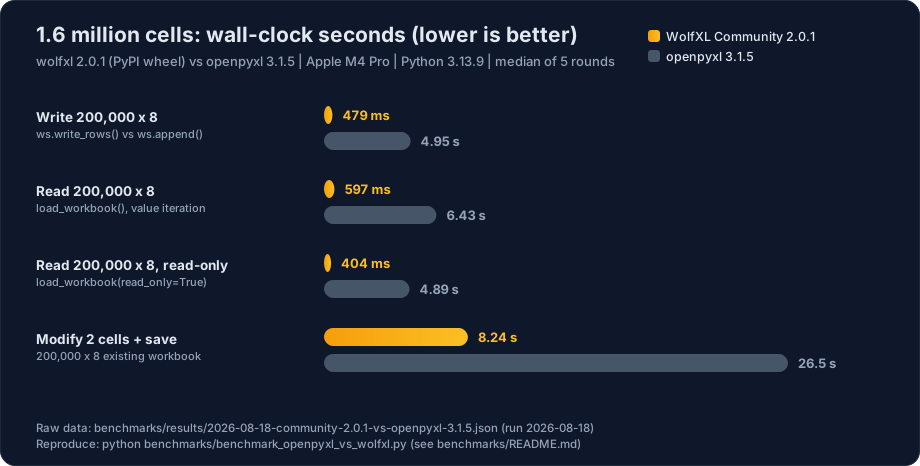
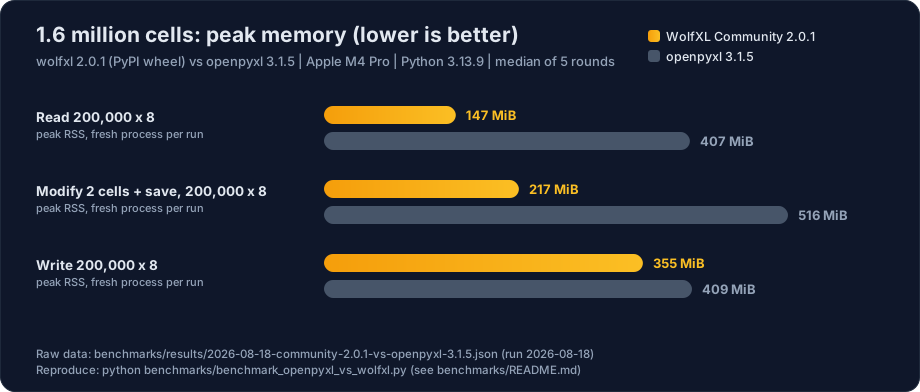
- openpyxl is slow or runs out of memory on a large file. On a 200,000-row by 8-column workbook (1.6 million cells), a full read with WolfXL took 0.60 s against 6.43 s for openpyxl 3.1.5 at 0.36x the peak memory, and the edit-two-cells-and-save phase took 0.25 s against 18.43 s. Large-file receipts.
- You are comparing openpyxl alternatives. A 13-library run on one machine covers PyExcelerate, XlsxWriter, python-calamine, fastexcel, pandas, Polars, DuckDB, and others. Writing 1.6 million cells took 0.73 s with WolfXL (PyExcelerate 3.64 s, XlsxWriter 4.69 s), and reading them back took 0.39 s (python-calamine 0.58 s). python-calamine and fastexcel only read files; WolfXL reads, writes, and edits them. openpyxl alternatives, measured.
- openpyxl drops parts of your template when it saves. openpyxl warns
that it will remove data validations, conditional formats, and sparklines
it does not support, and its documentation says shapes are lost. On a sheet
with an extension data validation and a sparkline, one cell edit saved by
openpyxl 3.1.5 lost both;
load_workbook(path, modify=True)in WolfXL 2.0.2 kept both. Modify mode saves the cells you change and preserves unchanged parts within the documented boundaries; addkeep_vba=Truefor.xlsmmacros. Why openpyxl loses template parts. - You are moving existing openpyxl code. Check the compatibility matrix for the API you use and the known limitations before switching a production path.
Community does not include native formula recalculation, PDF or image rendering, format conversion, or VBA and Power Query operations. Those ship in WolfXL Commercial:
- Recalculate formulas openpyxl leaves stale
- Render sheets and charts to PDF or PNG without LibreOffice
- Coming from Aspose.Cells for Python
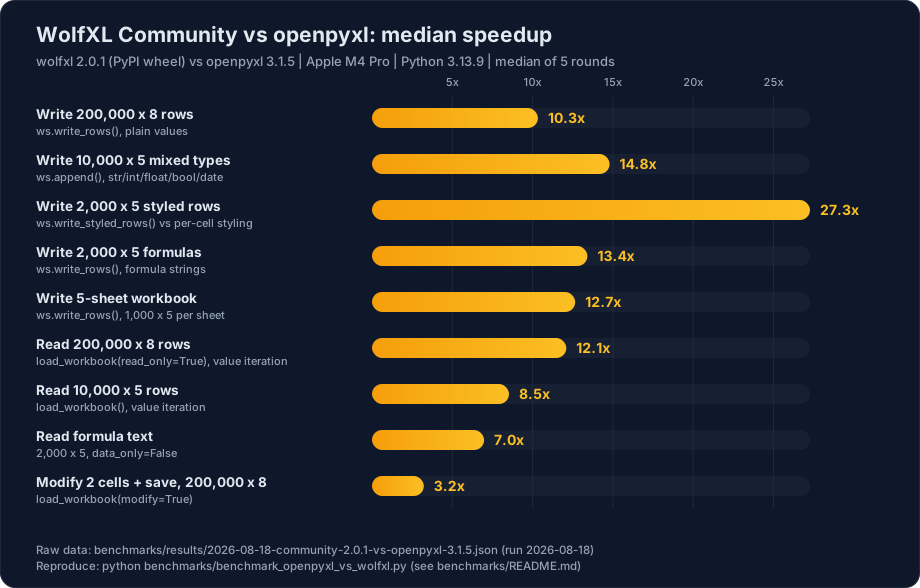
Median speedups over openpyxl 3.1.5 range from 2.6x on small in-place edits to
27x on styled row writes through the bulk write_styled_rows API, with most
reads and writes between 7x and 14x (wolfxl 2.0.1 PyPI wheel, Apple M4 Pro,
Python 3.13.9, median of 5 rounds). Every chart in this README is generated
from a committed raw results file,
never edited by hand.
Install the current Community release:
python -m pip install wolfxl==2.0.4WolfXL Community supports Python 3.9 and newer CPython versions for which a wheel is published.
from wolfxl import Alignment, Font, PatternFill, Workbook, load_workbook

workbook = Workbook()
sheet = workbook.active
sheet.title = "Summary"
sheet["A1"] = "Revenue"
sheet["A1"].font = Font(bold=True, color="FFFFFF")
sheet["A1"].fill = PatternFill(fill_type="solid", fgColor="336699")
sheet["B1"] = 125000
sheet["B1"].alignment = Alignment(horizontal="right")
workbook.save("report.xlsx")

loaded = load_workbook("report.xlsx")
print(loaded["Summary"]["B1"].value)
loaded.close()skills/wolfxl-xlsx is an agent skill for
editing existing workbooks without losing the parts the edit did not touch.
It tells the agent to edit in modify mode, recalculate with WolfXL instead of
a LibreOffice round trip, and run verify to confirm that every package part
and sheet feature from the source is still present. Copy the directory into
your agent's skills folder, for example ~/.claude/skills/wolfxl-xlsx.
Full openpyxl comparison from the committed benchmark run (wolfxl 2.0.1 PyPI wheel, Apple M4 Pro, Python 3.13.9, median of 5 rounds):
Cross-library comparison on a separate machine (AMD EPYC 9655, x86_64 Linux, Python 3.13, median of 5 rounds) against twelve other libraries: openpyxl, XlsxWriter, PyExcelerate, pylightxl, pandas, Polars, DuckDB, Tablib, pyexcel, python-calamine, fastexcel, and xlsx2csv. The bar for inclusion is xlsx support, no external application, and roughly one million PyPI downloads per month. To keep the baselines honest, the large plain write and the memory pass also measure openpyxl in write_only mode, XlsxWriter in constant_memory mode, and pandas with the xlsxwriter engine. Each library is measured only inside its supported scope; write-only, read-only, DataFrame, and SQL specialists are labeled:
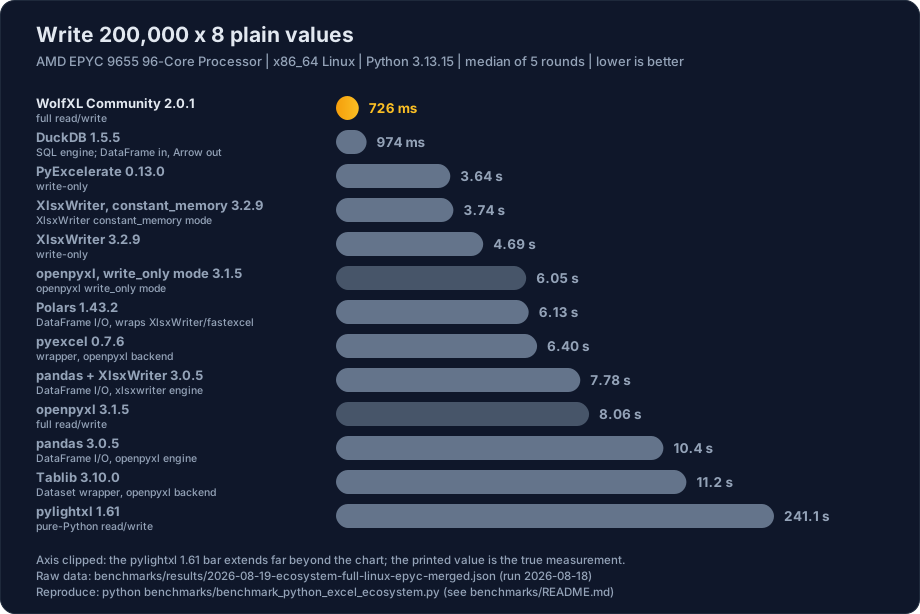
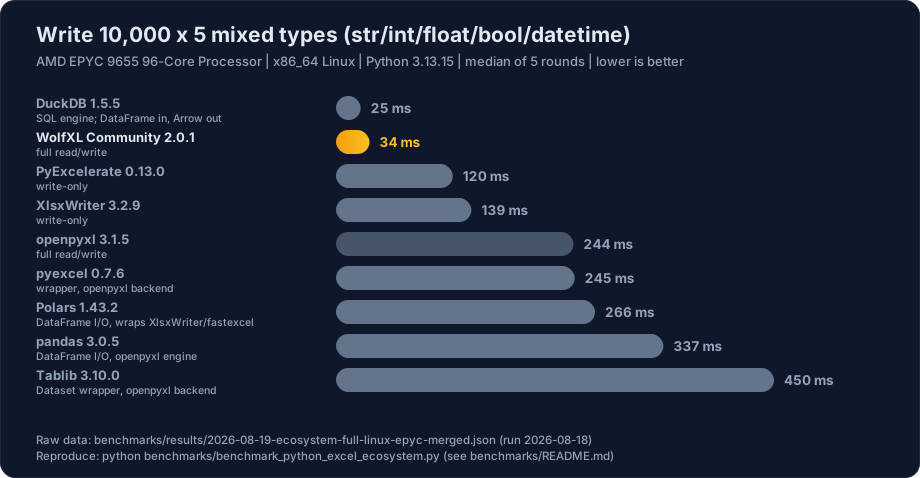
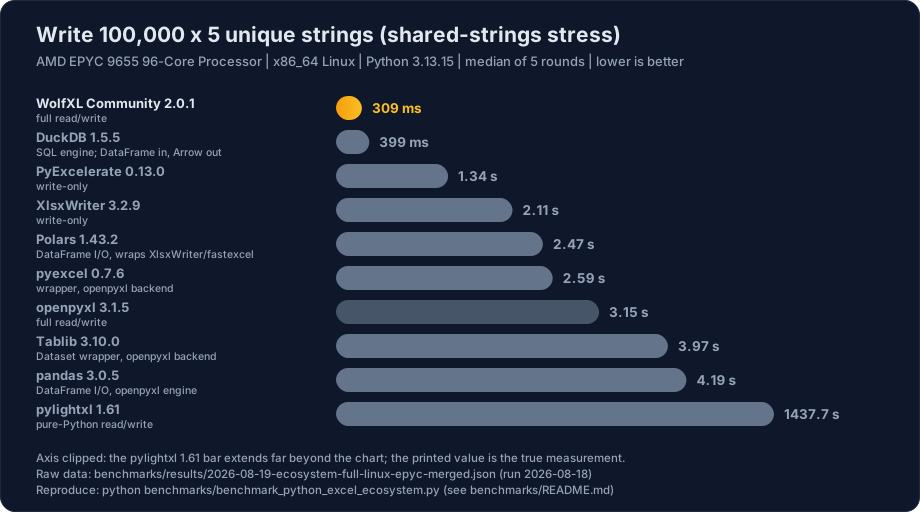
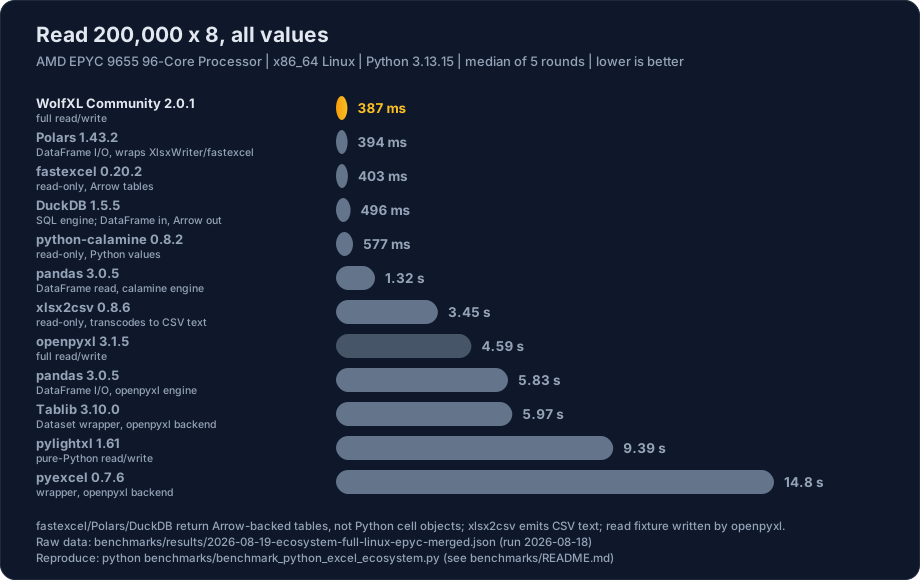
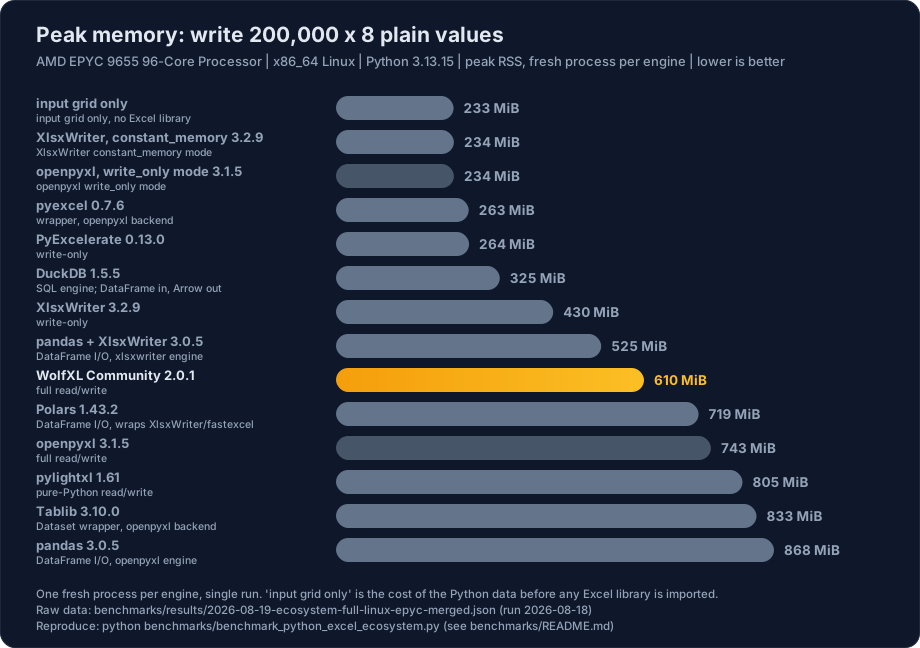
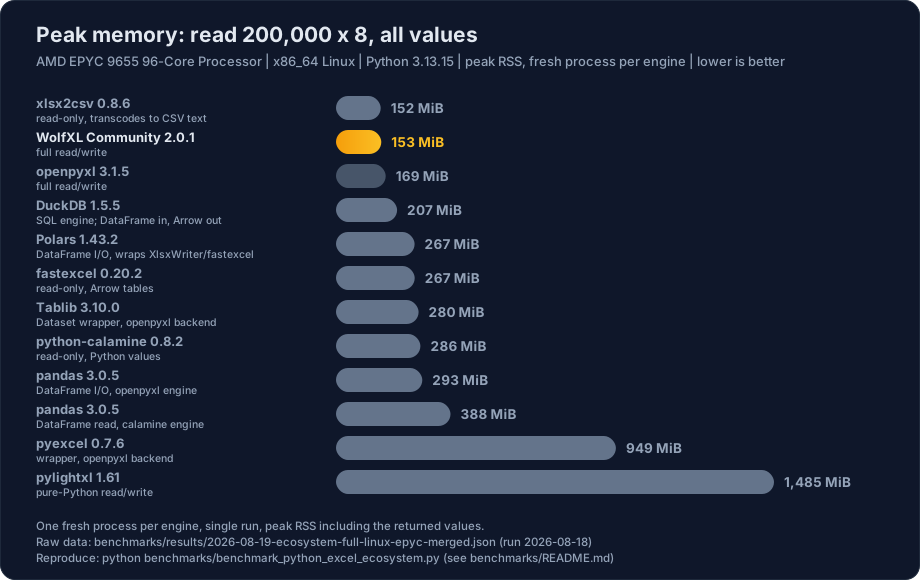
wolfxl leads every case in this run, including reads (387 ms vs 394 ms for Polars and 403 ms for fastexcel, which return Arrow-backed tables rather than Python cell values). The closest overall rival is DuckDB's excel extension, which wins the small mixed-type write outright (25 ms vs 35 ms, timed from a registered DataFrame) and stays within 1.4x elsewhere. The streaming modes own write memory: openpyxl write_only and XlsxWriter constant_memory peak at 234 MiB, effectively the cost of the input grid itself, where wolfxl's fully materialized workbook peaks at 610 MiB while writing 5-8x faster than either. pylightxl's pure-Python writer scales quadratically (241 s on the large plain write, 1,438 s on unique strings) and its bars are clipped to keep the charts readable.
Speedups vary by workload, and small workbooks see smaller wins. Raw results,
the benchmark harnesses, and reproduction instructions are in
benchmarks/.
The round-trip fidelity harness compares workbook packages before and after a no-edit save. Run it on your own files, inspect the typed part and relationship differences, and add another engine through the documented adapter protocol.
| WolfXL Community | WolfXL Commercial | |
|---|---|---|
| License | MIT | Commercial |
| Release line | Maintained 2.0 generation | Current 2.1+ generation |
| Workbook I/O | Included | Included |
| Existing 2.0 modify and pivot APIs | Included | Current implementations and fixes |
| Native recalculation | Not included | Included |
| Render, PDF, and image output | Not included | Included |
| Format conversion | Not included | Included |
| VBA and Power Query operations | Not included | Included |
| Production operations SDK | Not included | Included |
| Direct support | Community issues | Included with paid plans |
Community receives critical correctness and security fixes. New engines, expanded compatibility work, production operations, and direct support ship in WolfXL Commercial.
This split keeps the useful Excel I/O layer open while funding the compatibility, fidelity, and support work required by production workbook pipelines.
Use wolfxl.com for the current Commercial package, evaluation access, pricing, compatibility information, and support. Commercial source and releases are maintained separately and are not part of this repository.
Prerequisites: a supported CPython, Rust, and maturin.
python -m pip install maturin pytest defusedxml openpyxl Pillow
maturin develop
pytest tests/test_community_distribution.py -q
The distribution-boundary test verifies the Community version, compiled backends, and absence of Commercial-only Python modules.
See CONTRIBUTING.md for contribution guidelines and SECURITY.md for how to report a vulnerability.
WolfXL Community is available under the MIT License.